Why octagonal
Gérald Genta took the shape from a diver's helmet — specifically the deep-sea helmets used by commercial divers in the 1960s. The eight screws held the helmet's faceplate against its rubber gasket. Genta brought that engineering language to luxury jewelry: a watch case that looked engineered rather than ornamented.
The octagon does two things at once. Visually, it differentiates from every round-cased competitor. Mechanically, it provides eight purchase points for a bezel-to-case seal that no round bezel can match.
Royal Pop's interpretation
Swatch's Bioceramic Royal Pop case is octagonal but soft. Where the original Royal Oak's edges are crisp and hand-finished, Royal Pop's are softer-radiused — partly because Bioceramic doesn't tolerate the same edge profile, partly because the brief was "play, not luxury."
The eight screws are present but molded as part of the case rather than separately inserted. They are visible, they preserve the design signature, but they are not functional. The actual sealing is done by the case-back, which screws on conventionally.
The eight colorways and the eight screws
Each Royal Pop is named for "eight" in a different language: Otto Rosso (Italian), Huit Blanc (French), Green Eight (English), Blaue Acht (German), Orenji Hachi (Japanese), Lan Ba (Mandarin), Ocho Negro (Spanish), OTG Roz (Polish). Eight names, eight screws, eight pieces in the collection. The full set retails at $3,240 combined.
All 8 Royal Pop Colorways
Otto Rosso
Italian for "eight red"
SKU: SSX03R100N
$400 Lépine / $420 Savonnette

Huit Blanc
French for "eight white"
SKU: SSX03W100N
$400 Lépine / $420 Savonnette

Green Eight
English
SKU: SSX03G100N
$400 Lépine / $420 Savonnette

Blaue Acht
German for "eight blue"
SKU: SSX03B100N
$400 Lépine / $420 Savonnette

Orenji Hachi
Japanese for "eight orange"
SKU: SSX03O100N
$400 Lépine / $420 Savonnette

Lan Ba
Mandarin for "eight blue"
SKU: SSX03L100N
$400 Lépine / $420 Savonnette

Ocho Negro
Spanish for "eight black"
SKU: SSX03K100N
$400 Lépine / $420 Savonnette

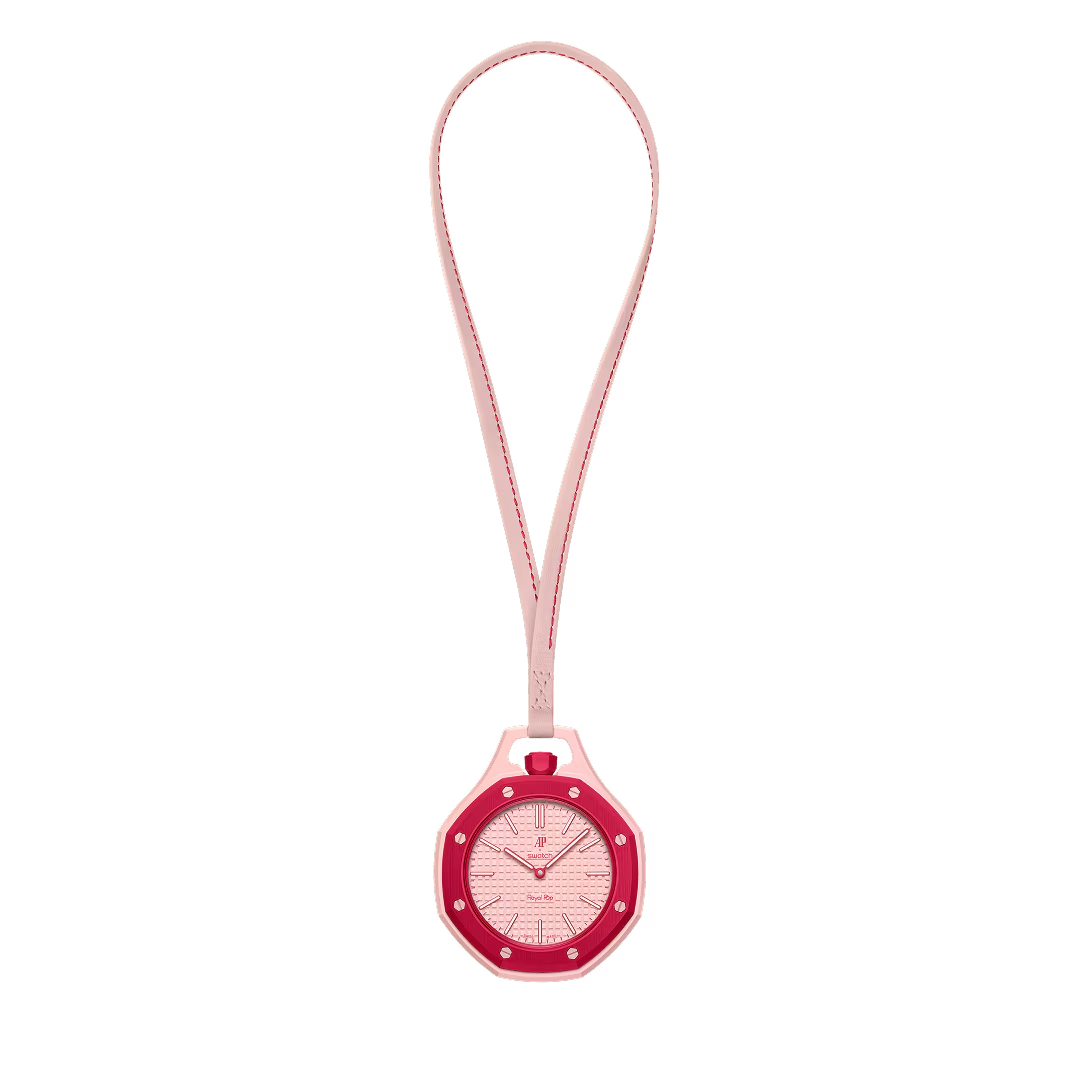
OTG Roz
Polish for "eight pink"
SKU: SSX03P100N
$400 Lépine / $420 Savonnette
Bioceramic vs. Brushed Steel: A Tactile and Visual Comparison
When comparing the Audemars Piguet Royal Oak’s brushed steel to Swatch’s Bioceramic used in the Royal Pop pocket watch, the differences are immediately apparent. The Royal Oak’s steel is meticulously finished with a combination of satin brushing and polished chamfers, a signature technique introduced in 1972 by Gerald Genta. This creates a play of light that shifts dynamically depending on the angle, giving the watch a luxurious, multifaceted appearance. In contrast, Bioceramic—a blend of ceramic and bio-sourced material—has a matte, uniform finish that lacks the reflective depth of steel but offers a modern, understated aesthetic. The tactile experience also differs: steel feels cooler and denser, while Bioceramic is warmer and lighter, making it more comfortable for extended wear.
The weight discrepancy is significant. The Royal Oak’s 39mm stainless steel case weighs approximately 140 grams, giving it a substantial, premium feel on the wrist. The Royal Pop, however, weighs just 65 grams due to its Bioceramic construction, making it noticeably lighter and more portable as a pocket watch. This lightness aligns with Swatch’s playful, accessible ethos but sacrifices the heft that many enthusiasts associate with luxury timepieces. The Royal Pop’s lightness could be a pro or con depending on the buyer’s preference—those seeking a traditional, weighty feel may find it lacking, while others will appreciate its ease of handling.
From a durability perspective, Bioceramic offers advantages. It’s scratch-resistant and less prone to corrosion compared to steel, making it ideal for everyday use. However, it doesn’t replicate the patina that steel develops over time, which some collectors value as part of a watch’s character. The Royal Pop’s Bioceramic case also lacks the intricate finishing details of the Royal Oak, such as the interplay between brushed and polished surfaces. This simplification is a trade-off for its accessible $400 price point, a stark contrast to the Royal Oak’s $3,240 starting price in the 1970s (and much higher today).
The Role of Light Reflection in Design Perception
Light reflection is a key factor in distinguishing these two materials. The Royal Oak’s brushed steel reflects light in a way that highlights its geometric case design, with the alternating brushed and polished surfaces creating a sense of depth and complexity. This effect is achieved through hours of hand-finishing, a process that contributes to the watch’s high cost. The Royal Pop’s Bioceramic, by contrast, absorbs more light due to its matte finish, resulting in a flatter, more uniform appearance. While this simplifies the visual experience, it also aligns with Swatch’s design philosophy of bold, straightforward aesthetics.
The matte finish of Bioceramic also reduces fingerprints and smudges, a practical benefit for a watch designed to be handled frequently. However, it lacks the dynamic interplay of light that makes the Royal Oak so captivating. For buyers who prioritize visual complexity and craftsmanship, this difference will be notable. Those who prefer a clean, modern look may find the Bioceramic finish refreshingly unpretentious.
Ultimately, the choice between Bioceramic and brushed steel comes down to personal preference and intended use. The Royal Pop’s Bioceramic offers a lightweight, durable, and modern alternative to the Royal Oak’s traditional steel construction. While it doesn’t replicate the tactile and visual sophistication of its high-end counterpart, it succeeds in bringing a playful, accessible take on a classic design. For buyers, the decision hinges on whether they value the heft and craftsmanship of steel or the practicality and modernity of Bioceramic.